What industries do you work with?
We've built custom software for Education, Financial Services, Online Publishing, Real Estate, Health Care, Non-Profit, Hospitality, Manufacturing, Entertainment, Internet, Fashion, and Consumer Goods-among others.
How much does custom software development cost?
It depends on what you're building. Focused builds and integrations into an existing system typically start around $50K. Full platform builds generally range from $150K to $400K and up, depending on complexity, integrations, and how much of the surface area is net new versus modernized. We work mostly with companies that already have a product and revenue, so most engagements are scoped against a real system rather than a blank page. We give you a firm number after a short discovery, not before.
How long does a typical project take?
It depends on scope. A focused MVP or integration project might take 6-10 weeks. Larger platform builds typically run 4-8 months. We'll give you a realistic timeline after discovery.
Do you work with existing codebases?
Yes-it's our specialty. We call it brownfield development. We
assess what you have, identify what's worth keeping, and build from there.
Where is your team located?
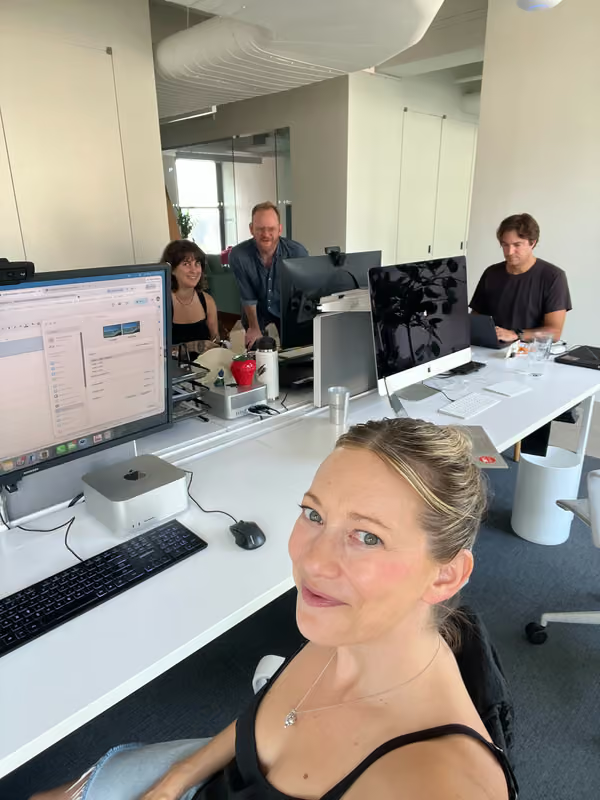
We're headquartered in New York City, with partners in Nashville and South Florida. Working as one small senior team means faster turnaround without sacrificing quality or communication.
How do you handle a codebase you didn't write?
Carefully, and with respect for the decisions that got it here. We've developed a systematic approach to codebase onboarding: reading code to understand intent, tracing behavior through the system, mapping dependencies, and identifying patterns before touching anything. We typically reach meaningful productivity within 2–4 weeks on a new codebase. Our default is to improve incrementally, not rewrite, unless the architecture is fundamentally misaligned with where the product needs to go.
What does "AI-augmented development" actually mean in practice?
It means our engineers use AI tools to accelerate the parts of development that benefit from acceleration: generating boilerplate, drafting tests, writing documentation, and doing initial code review passes. Every output goes through human review before it becomes part of your codebase. Our senior engineers make the architectural decisions, handle the judgment calls, and own the quality of what ships. AI handles the first draft; humans handle everything that actually matters. See
how we build with AI for the full process, or learn about
our AI Development Partner service.
What's the difference between a fixed-fee and retainer engagement?
Fixed-fee works well when the scope is well-defined: a discrete build, integration, or feature set where we can draw clear boundaries around what's included. Retainers work better for ongoing development, brownfield work, or situations where requirements are likely to evolve. Most of our longer-term client relationships start with a fixed-fee discovery or initial build, then move into a retainer as the partnership deepens. We'll tell you which structure makes sense for your situation.
What happens if requirements change mid-project?
They always do. We build change into how we work rather than pretending a spec written at the start of a project will survive contact with reality. On fixed-fee projects, material scope changes get discussed openly and repriced if needed, no surprises. On retainers, we adjust priorities collaboratively as your needs shift. The goal is a partnership where you can tell us what changed without worrying about a change order fight.
Should we build custom software or buy a SaaS tool?
Buy when an existing tool already does the job and your process isn't what sets you apart. Build when the workflow is the product, you've outgrown the tools you have, or your systems need to talk to each other. A short discovery phase usually settles it, and we'll tell you if building isn't the right call.
How do we choose a custom software development company?
Ask whether they work on existing systems like yours, whether you'll work directly with the engineers doing the build, whether they'll tell you when not to build, and how they handle code they didn't write.
Should we build in-house or hire an agency?
In-house when software is the core of your company and you can hire and keep the team. An agency when you need speed, a specific skill, or a senior team for a bounded build. Some engagements end with a handoff to your in-house team; others continue as an ongoing partnership that frees your team for other work.