Behavioral Product Design
Products built on how people actually behave, not how we wish they would. We design experiences that drive the actions your business depends on.









Since 2006
•
$125M+ client revenue supported
•
4+ year avg. client relationship
Most product teams design for what users say they want. We design for what they actually do. By applying behavioral science principles, we help teams identify the friction that kills conversion and the feedback loops that drive retention.
When good design isn't enough
Your product looks great. Your flows are logical. But users still aren't converting, retaining, or engaging the way you expected. The gap between a well-designed product and one that drives action isn't visual but behavioral. Understanding the cognitive patterns behind user decisions is what closes that gap.
Users aren't doing what you designed them to do.
You've mapped the happy path. The UX is clean. But completion rates are flat, onboarding drop-off is high, and users abandon features you spent months building. The problem isn't the interface but a mismatch between how your product presents choices and how people actually make decisions.
You're optimizing screens when you should be optimizing decisions.
A/B testing button colors won't fix a fundamentally misaligned experience. Behavioral design looks upstream: what's the decision architecture? What defaults are in play? What cognitive load are you creating? Small structural changes to how choices are framed can move metrics that visual redesigns can't touch.
Your product needs to drive action, not just display information.
Dashboards don't change behavior. Notifications don't guarantee engagement. Products that drive action are designed around behavioral triggers, progressive commitment, and well-timed feedback loops. We design the nudges, defaults, and micro-interactions that turn passive users into active ones.
Services
Behavioral Audit

Evaluate your existing product through a behavioral science lens: identifying friction points, cognitive overload, and missed opportunities to guide user decisions
Decision Architecture
Design the structure of choices within your product: defaults, sequencing, framing, and progressive disclosure that guide users toward desired outcomes
Onboarding & Activation Design
Apply commitment and consistency principles to turn signups into active users, reducing time-to-value and increasing feature adoption
Retention & Engagement Patterns
Design feedback loops, variable rewards, and habit-forming interaction patterns that keep users coming back without dark patterns
Conversion Optimization
Move beyond surface-level A/B testing to structural interventions grounded in loss aversion, social proof, and anchoring that meaningfully shift conversion rates
Behavioral Research & Testing
Uncover the cognitive patterns behind your users' real behavior through research methods designed to reveal what surveys and analytics miss
Process
1. Behavioral Audit
We evaluate your product through a behavioral science lens: mapping decision points, identifying cognitive friction, and benchmarking against behavioral best practices. You get a clear picture of what's working with human psychology and what's working against it.
2. Research & Insight
We go beyond traditional UX research to understand the behavioral drivers behind your users' actions. Through targeted observation, decision mapping, and behavioral analysis, we identify the patterns that surveys and analytics can't reveal.
3. Behavioral Strategy
We translate research into a behavioral design strategy: specific interventions mapped to specific metrics. Every recommendation is tied to a behavioral principle and a measurable outcome, so you know exactly what we're changing and why.
4. Design & Implementation
Behavioral patterns come to life in the product. We work with your design and engineering teams (or ours) to implement decision architecture, feedback loops, and interaction patterns that drive the actions your business depends on.
5. Measure & Iterate
Behavioral design is hypothesis-driven. We measure the impact of every intervention, learn from what works (and what doesn't), and iterate. The goal isn't a one-time redesign but a continuous behavioral optimization practice.
Recent Case Studies
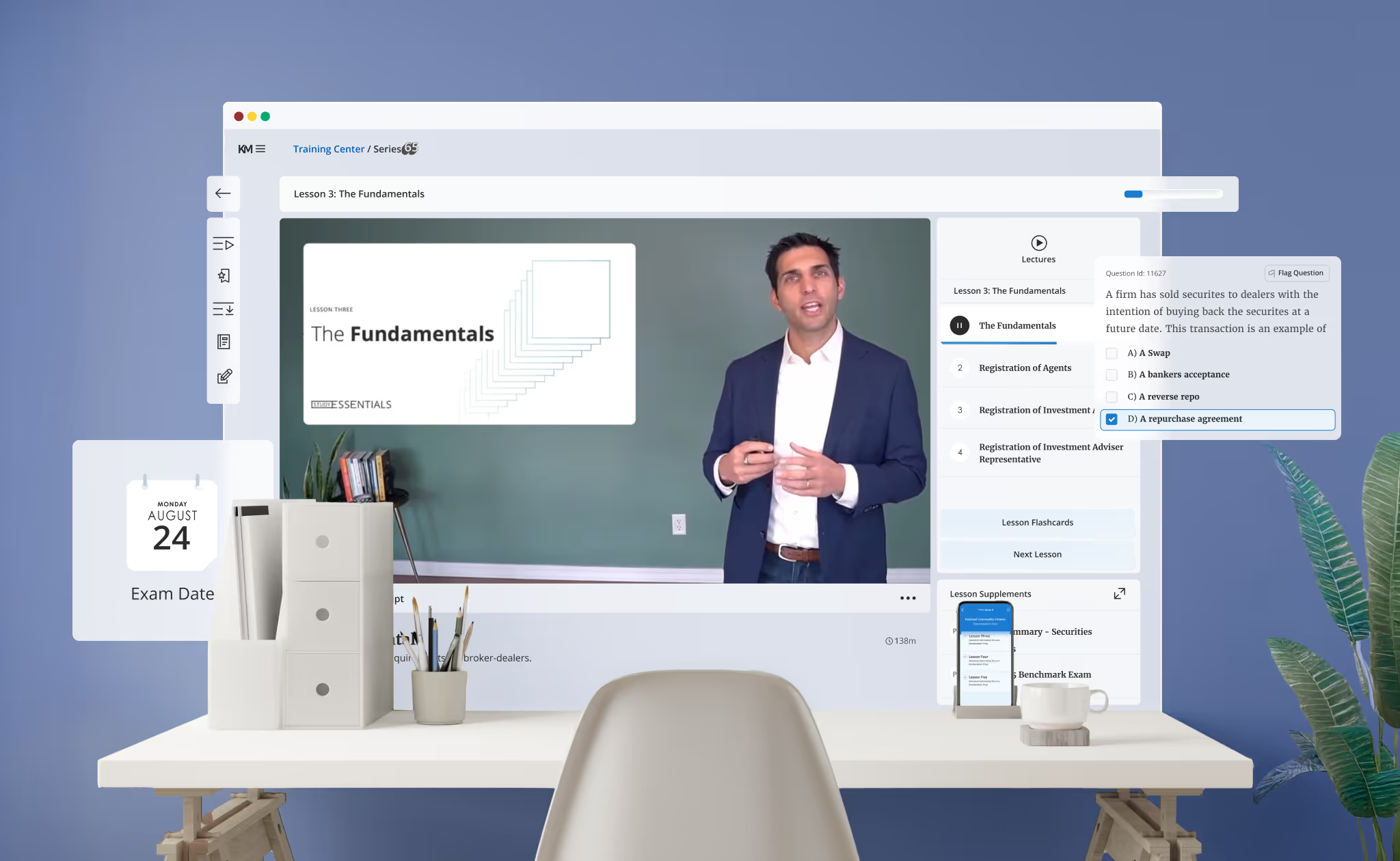
They're strategic and critical thinkers with a lot of experience, insights, and knowledge. They took their responsibilities beyond the scope of web development in everything they did.
Liza Streiff
CEO, Knopman Marks
FAQ
What is behavioral product design?
Behavioral product design applies principles from behavioral science (how people actually make decisions, form habits, and respond to choices) to the design of digital products. Instead of relying on assumptions about rational user behavior, we design around cognitive biases, heuristics, and decision patterns that research has shown drive real-world actions.
How is behavioral design different from UX design?
Traditional UX design focuses on usability: can users complete tasks efficiently? Behavioral design goes deeper: will users actually do what the product needs them to do? We look at decision architecture, defaults, friction, and feedback loops. These are the structural factors that determine whether users convert, retain, and engage, not just whether they can find the right button.
What does a behavioral audit include?
A behavioral audit evaluates your product through a behavioral science lens. We map every key decision point, identify cognitive friction and overload, assess your default settings and choice architecture, and benchmark against behavioral best practices. The output is a prioritized set of behavioral interventions tied to specific metrics, not a generic UX report.
Do you use dark patterns?
No. Behavioral design and dark patterns are fundamentally different. Dark patterns exploit users for the company's benefit. Behavioral design aligns user goals with business goals by making it easier for users to do what they already want to do. We design nudges, not traps. Every intervention we recommend should benefit both the user and the business.
What kind of results can behavioral design produce?
Behavioral interventions can move metrics that traditional redesigns can't. We've seen improvements in onboarding completion, feature adoption, form submission rates, and retention. The specific impact depends on your product and the behaviors you're targeting, which is why we start with a behavioral audit to identify the highest-leverage opportunities.
How does behavioral design work with our existing design and engineering teams?
We work alongside your team, not instead of them. A typical engagement starts with a behavioral audit and strategy, then we collaborate with your designers and engineers to implement the interventions. We can also handle design and engineering in-house through our Product and Engineering Studios if you need a fully integrated team.
Design products that drive action
Start with a behavioral audit. We'll show you exactly where your product is working against human psychology and how to fix it.